
Step Confidently This Winter: The Essential Guide to Shockwave Therapy and Foot Pain Management in Kelowna
As the crisp winter air settles across Kelowna, Victoria, and the broader British Columbia region, from the bustling streets of Surrey to the serene landscapes of Cranbrook, a familiar pattern emerges. Podiatry professionals observe a seasonal uptick in patients reporting aggravated foot and heel pain. The culprit? A combination of cold, rigid tissues, less supportive winter footwear, and slippery surfaces that alter our gait. For many, this means the return of sharp, debilitating pain from conditions like plantar fasciitis or Achilles tendinopathy, turning a simple winter walk into a dreaded task. What most people don’t realize is that chronic heel pain isn’t something they simply have to endure until spring. Advanced, non-invasive treatments are proving remarkably effective, and industry data reveals one modality, in particular, is changing how we manage persistent foot pain: Extracorporeal Shockwave Therapy (ESWT).
What Industry Professionals Know About Winter Foot Pain in BC
The colder months in communities like Nanaimo, Vernon, and Chilliwack present a unique set of challenges for foot health. Podiatry experts consistently find that the drop in temperature leads to physiological changes that can trigger or worsen foot pain. Cold weather causes muscles, ligaments, and the plantar fascia—the thick band of tissue on the bottom of your foot—to become less flexible and more prone to strain or injury. Tissues contract in the cold, pulling on nerve endings and causing joint pain. Furthermore, the synovial fluid that lubricates our joints can thicken in lower temperatures, leading to increased stiffness and discomfort.
This physiological response is compounded by lifestyle changes. Residents in Langley and Abbotsford often switch from supportive athletic shoes to heavy, rigid, or unsupportive winter boots. While essential for warmth and traction, many winter boots lack the necessary arch support, leading to biomechanical stress that can inflame the plantar fascia. Increased time spent walking on hard, icy, or uneven terrain in places like Penticton and Courtenay can further aggravate these conditions, making winter a prime season for foot pain flare-ups.
Common Winter-Related Foot Conditions
- Plantar Fasciitis: Characterized by sharp, stabbing pain in the heel, especially with the first steps in the morning. Cold weather exacerbates the inflammation and stiffness associated with this condition.
- Achilles Tendinopathy: Pain and stiffness along the back of the heel, where the Achilles tendon connects to the bone. Cold can reduce the tendon’s flexibility, increasing the risk of micro-tears and inflammation.
- Bunions and Hammertoes: The pressure from narrow or ill-fitting winter boots can significantly worsen pain and irritation associated with these structural foot issues.
- Athlete’s Foot and Fungal Toenails: Thick, non-breathable winter socks and boots create a warm, moist environment, which is an ideal breeding ground for fungal infections.
The Professional’s Guide to Shockwave Therapy: A Modern Solution for Chronic Pain
For individuals in White Rock, Surrey, and across British Columbia struggling with chronic foot pain that hasn’t responded to traditional treatments like stretching, icing, or custom orthotics, Shockwave Therapy represents a significant advancement in podiatric medicine. This non-invasive technology, originally developed to break up kidney stones, is now a leading treatment for stubborn musculoskeletal conditions.
Extracorporeal Shockwave Therapy (ESWT) is not an electrical shock. Instead, it uses a specialized device to deliver high-energy acoustic sound waves to the precise location of the injury. These powerful sound waves create controlled “microtrauma” in the affected tissue. This process effectively jump-starts a stalled healing process. Professional standards in podiatry indicate that this stimulation triggers the body’s natural repair mechanisms, leading to a cascade of beneficial effects.
How Shockwave Therapy Promotes Healing
- Increased Blood Flow (Neovascularization): The acoustic waves stimulate the formation of new blood vessels in the area. This enhanced circulation brings more oxygen and essential nutrients to the damaged tissue, accelerating repair.
- Reversal of Chronic Inflammation: The therapy modulates the inflammatory response, helping to transition the tissue from a chronic, non-healing inflammatory state to an acute healing phase.
- Stimulation of Collagen Production: Collagen is a critical protein for repairing and strengthening connective tissues like ligaments and tendons. Shockwave therapy encourages the production of new, healthy collagen fibers.
- Pain Reduction: The intense pulses provide a form of hyperstimulation to nerve endings, which can have an immediate pain-relieving effect and help disperse pain-mediating substances.
Industry case studies consistently demonstrate high success rates. Some research indicates that up to 91% of patients experience significant improvement in their condition. For plantar fasciitis specifically, numerous studies have confirmed its effectiveness. A 2021 best practice guide identified shockwave therapy as a key treatment for plantar heel pain, backed by high-quality evidence showing a large effect on improving both pain and function.
What to Expect During a Shockwave Therapy Session
For a patient visiting a foot injury clinic in Abbotsford or Kelowna, the prospect of a new therapy can be daunting. However, the process of receiving shockwave therapy is straightforward and efficient. A typical course of treatment involves three to five sessions, usually spaced a week apart.
Here’s what a session typically involves:
- Assessment: The podiatrist will first locate the precise area of pain through palpation and review of your diagnostic imaging.
- Gel Application: A water-based gel is applied to the skin over the treatment area. This helps to ensure the acoustic waves are transmitted efficiently into the tissue.
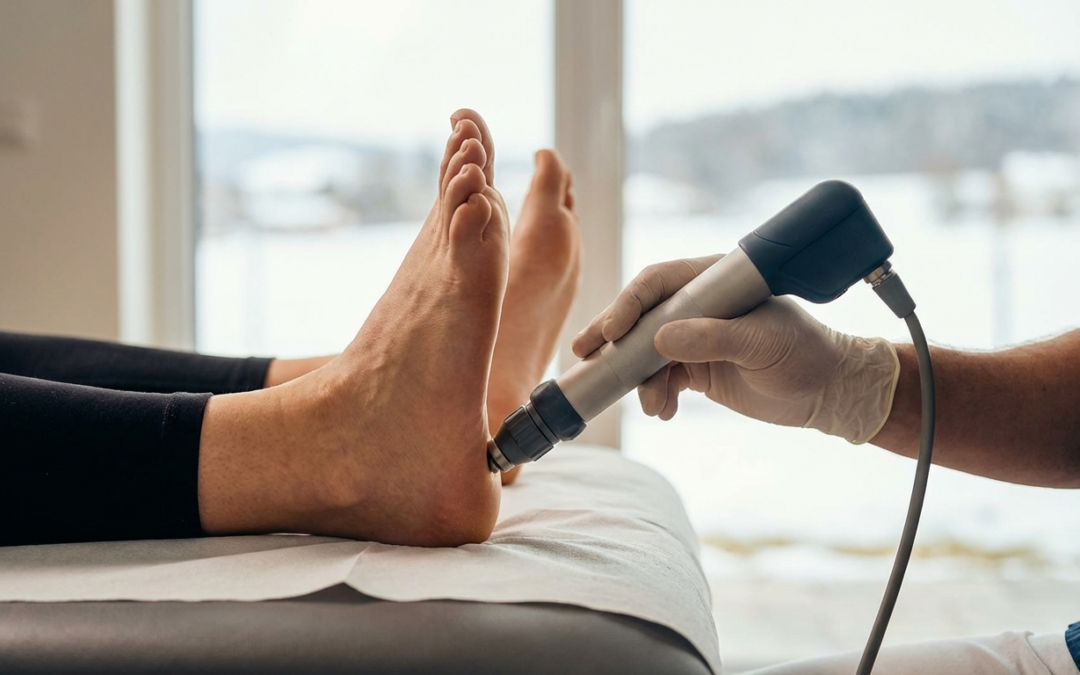
- Treatment Delivery: A handheld applicator is placed on the skin. The podiatrist then delivers a set number of acoustic pulses directly to the injured area. Sessions are relatively short, often lasting only 15 to 20 minutes.
Most patients describe the sensation as uncomfortable but tolerable, similar to a deep, intense massage. The intensity can be adjusted based on patient comfort. One of the most significant advantages reported by podiatry professionals is the lack of downtime; patients can return to their normal daily activities immediately after a session.
Local Expert FAQ: Shockwave Therapy in the BC Interior and Lower Mainland
Is shockwave therapy covered by insurance in British Columbia?
Coverage varies significantly between extended health plans. While many insurance companies in BC do cover shockwave therapy when performed by a qualified professional like a podiatrist or physiotherapist, it’s not universal. Some plans may still classify it as “experimental.” It is always recommended to check directly with your insurance provider to confirm the details of your coverage for “ESWT services” or “podiatry treatments.”
What is the typical cost of shockwave therapy in the Kelowna or Victoria area?
The cost of shockwave therapy in Canada can vary based on the clinic, the practitioner’s expertise, and the type of equipment used. Prices per session generally range from approximately $100 to $150. Some clinics may offer packages for a full course of treatment, which can be more cost-effective. For example, a package of three treatments including an initial assessment might cost around $360.
How soon can I expect results from shockwave therapy for my foot pain?
While some patients report feeling immediate relief after the first session, the true benefits of shockwave therapy are cumulative and unfold over time. The therapy initiates a healing process that continues for weeks after the final treatment. Significant improvement in pain and function is often noticed after the third session, with continued progress in the following weeks as the tissue remodels and strengthens.
Are there any side effects?
Side effects are typically minimal and temporary. Some patients may experience mild tenderness, redness, or slight swelling at the treatment site for a day or two, but these effects usually resolve quickly. It is considered a very safe procedure with no major side effects reported in clinical studies.
Integrating Shockwave Therapy with a Comprehensive Winter Foot Care Plan
Leading podiatry professionals in areas from Penticton to Nanaimo emphasize that shockwave therapy is most effective when it is part of a holistic treatment plan. To step confidently this winter, consider integrating this advanced therapy with proven foot care strategies.
- Proper Winter Footwear: Invest in insulated, waterproof boots that offer excellent arch support and a wide toe box to prevent cramping. If your boots lack support, consider using over-the-counter inserts or, for more significant biomechanical issues, professionally fitted custom orthotics. Custom orthotics in Victoria or Nanaimo are designed to control abnormal foot motion and reduce strain on the plantar fascia and other structures.
- Keep Feet Warm and Dry: Wear moisture-wicking socks, such as those made from wool or synthetic blends, to keep feet dry from sweat. Damp feet lose heat faster and are more susceptible to fungal infections. If you have diabetes, this is especially critical, as moisture can lead to skin breakdown and serious infections.
- Daily Stretching: Gently stretch your calf muscles and the plantar fascia before getting out of bed and throughout the day. Cold tissues are less pliable, and regular stretching can help maintain flexibility and reduce the risk of strain.
- Stay Active (Safely): Regular movement promotes healthy circulation. However, be mindful of icy conditions that can cause slips and falls. Opt for low-impact indoor activities like swimming or cycling if outdoor conditions are hazardous.
Key Takeaways
- Winter conditions in British Columbia often worsen foot pain due to cold, stiff tissues and improper footwear.
- Chronic conditions like plantar fasciitis and Achilles tendinopathy are frequently aggravated during colder months.
- Shockwave Therapy (ESWT) is a highly effective, non-invasive treatment that stimulates the body’s natural healing processes.
- The therapy works by increasing blood flow, reversing chronic inflammation, and promoting collagen production.
- A typical treatment course involves 3-5 short sessions with no downtime, allowing you to resume daily activities immediately.
- For optimal results, combine shockwave therapy with a comprehensive care plan including supportive footwear, custom orthotics, and proper winter foot hygiene.
Don’t let foot pain dictate your winter. The professional consensus is clear: chronic heel and foot pain is not something you have to live with. Advanced treatments like shockwave therapy, combined with proactive foot care, offer a clear path toward relief. By addressing the root cause of your pain, you can regain mobility and step confidently through this winter and all the seasons to come.
While we aim for accuracy, please verify details for your specific situation. For personalized advice and to discuss how these insights apply to your specific needs, we’d love to chat with you directly.