
What’s Really Behind Your Chronic Heel Pain? The Surprising Answer Inside
You’ve tried stretching. You’ve bought new shoes. You’ve iced your heel until it’s numb. Yet, that sharp, stabbing pain when you first step out of bed in the morning persists. For many residents across British Columbia, from Victoria to Cranbrook, chronic heel pain is a daily battle. The immediate assumption for most is plantar fasciitis, and while that’s a frequent diagnosis, what if the root cause is something more complex—something hiding in plain sight? Industry data reveals a significant percentage of chronic heel pain cases are either misdiagnosed or complicated by an underlying factor that goes unaddressed. The real culprit is often not just a single strained ligament, but a chain reaction starting with faulty biomechanics and nerve involvement that most people, and even some general practitioners, overlook.
This isn’t just about the plantar fascia. It’s about understanding the intricate system of nerves, muscles, and bones that must work in perfect harmony. When this system is imbalanced, the heel becomes the unfortunate recipient of immense, repetitive stress. In this professional guide, we’ll uncover the surprising truth behind persistent heel pain, exploring the biomechanical faults and nerve-related issues that are often the real drivers of your discomfort. We will delve into why standard treatments sometimes fail and what advanced diagnostic and treatment pathways, available right here in B.C., can offer lasting relief.
Beyond the Usual Suspect: Why Plantar Fasciitis Isn’t the Whole Story
Plantar fasciitis is the most common diagnosis for heel pain, characterized by inflammation of the thick band of tissue (the plantar fascia) that runs across the bottom of your foot. It’s responsible for that classic “first step in the morning” pain. However, leading podiatry professionals in British Columbia are increasingly observing cases where chronic heel pain doesn’t respond to traditional plantar fasciitis treatments. This is because the inflammation is often a symptom, not the root cause.
The real issue frequently lies in the mechanics of your foot and ankle. Think of your foot as the foundation of your body. If that foundation is unstable, it creates stress that reverberates up through your ankle, knee, hip, and even your back. Minor, often imperceptible, structural issues can lead to major functional problems.
The Biomechanical Cascade: How Your Foot’s Structure Dictates Pain
Experts in podiatric medicine know that the way you walk (your gait cycle) is critical. A common biomechanical flaw is excessive pronation, where the arch of the foot collapses inward. This over-pronation puts a tremendous strain on the plantar fascia, constantly tugging at its insertion point on the heel bone. Over time, this repetitive stress leads to micro-tears, inflammation, and chronic pain. Conversely, a high-arched, rigid foot (supination) can be an equally significant problem, as it lacks the natural shock absorption needed to dissipate forces during walking and running, concentrating impact directly on the heel.
A comprehensive biomechanical assessment at a clinic, like those in Kelowna or Langley, goes far beyond a simple visual check. It involves analyzing gait, foot posture, and joint range of motion to identify these subtle yet powerful imbalances. This is where advanced solutions like Custom Orthotics in Nanaimo or Penticton become essential. Unlike over-the-counter inserts, custom orthotics are prescribed medical devices built from a precise 3D scan of your feet, designed to correct your specific biomechanical faults and restore proper foot function, thereby removing the underlying stress on the heel.
The Surprise Culprit: Nerve Entrapment
Here is the answer that surprises many: a significant portion of what is diagnosed as “stubborn” plantar fasciitis is actually, or is complicated by, nerve entrapment. A specific nerve, called the first branch of the lateral plantar nerve (also known as Baxter’s nerve), can become compressed or entrapped as it passes through the inner side of the ankle and heel. This condition, Baxter’s nerve entrapment, mimics the symptoms of plantar fasciitis almost perfectly, including pain in the morning and after periods of rest.
Why does this happen? The same biomechanical flaws that cause plantar fasciitis—like over-pronation—can also cause the muscles and ligaments in the foot to swell and squeeze this nerve. Because the symptoms are so similar, it’s a diagnosis that is frequently missed without specialized assessment. Podiatrists in clinics from Surrey to Vernon are equipped with the diagnostic skills to differentiate between these conditions. Treatment must address the nerve compression directly, which may involve specific injection therapies, physical therapy modalities, or sometimes custom orthotics designed to offload the specific area of nerve impingement.
Modern Diagnostics: Getting the Right Answer for Your Heel Pain
Effective treatment begins with an accurate diagnosis. Relying on a self-diagnosis or a cursory examination can lead to months, or even years, of ineffective treatment and continued frustration. A specialist in foot and ankle care will employ a multi-faceted approach to get to the root of your problem.
The diagnostic process in a modern podiatry clinic often includes:
- Detailed History: Understanding the exact nature of your pain—when it started, what makes it worse, what it feels like (sharp, dull, burning)—provides critical clues.
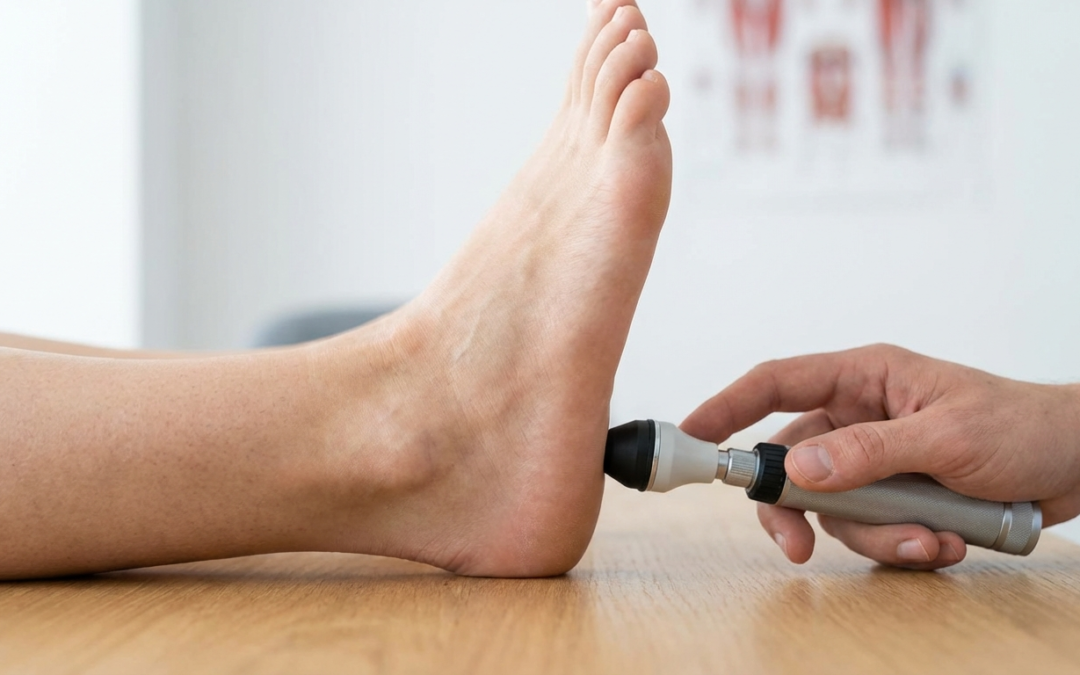
- Physical Examination: A hands-on assessment involves palpating specific structures in the foot and ankle to pinpoint the source of pain and assess the range of motion in key joints. This helps differentiate between soft tissue, joint, or nerve-related pain.
- Biomechanical & Gait Analysis: This is a cornerstone of diagnosing chronic heel pain. By observing how you stand and walk, a podiatrist can identify the underlying structural issues contributing to your pain. This is a critical step for anyone seeking a foot pain specialist in Victoria or Abbotsford.
- Diagnostic Imaging: While not always necessary, an ultrasound can be used to visualize the plantar fascia, measure its thickness (a key indicator of inflammation), and identify any tears or heel spurs. It’s also invaluable for identifying soft tissue masses or nerve swelling that could be causing compression. In more complex cases, an MRI may be ordered.
This thorough evaluation ensures that the treatment plan is tailored to the true cause of your pain, not just the most obvious symptoms.
Advanced Treatment Pathways for B.C. Residents
Once a precise diagnosis is established, a range of cutting-edge treatments are available that go far beyond simple rest and ice. The goal of modern podiatric care is not just to manage symptoms, but to resolve the underlying issue and prevent recurrence.
Custom Orthotics: The Foundation of Recovery
As mentioned, correcting biomechanics is paramount. For many dealing with chronic heel pain, custom orthotics in Victoria or Kelowna are the most important long-term solution. By supporting the arches, controlling abnormal motion, and redistributing pressure away from the heel, these devices address the root mechanical cause of the problem. This not only allows the inflamed tissue to heal but also prevents the issue from returning.
Shockwave Therapy: Stimulating Natural Healing
Extracorporeal Shockwave Therapy (ESWT) is a non-invasive treatment that has shown remarkable success in treating chronic heel pain. Podiatry clinics in locations like Chilliwack and Penticton offer this advanced modality. The technology uses high-energy acoustic waves to stimulate a powerful healing response in the damaged tissue. Industry studies have demonstrated that Shockwave therapy can break down scar tissue, increase blood flow to the area, and trigger the body’s natural repair mechanisms. It is particularly effective for long-standing cases of plantar fasciitis that have not responded to other treatments.
Targeted Injection Therapies
While cortisone injections can provide temporary relief by reducing inflammation, they don’t address the underlying pathology and can have side effects with repeated use. Modern podiatry offers more advanced regenerative options. Prolotherapy and Platelet-Rich Plasma (PRP) injections are therapies that use the body’s own healing components to repair damaged ligaments and tendons, offering a more long-term solution.
Comprehensive Care for Related Conditions
Often, heel pain is just one piece of the puzzle. An individual might also be suffering from other common foot ailments. For instance, a patient seeking bunions treatment in Victoria may find their bunion is contributing to their poor biomechanics and subsequent heel pain. Similarly, conditions like fungal toenails, which may seem unrelated, are part of overall foot health that a comprehensive diabetic foot care Surrey program would address to prevent complications. Addressing all foot-related issues holistically is key to overall mobility and health.
Local Expert FAQ: Heel Pain Questions for British Columbians
Q: I’m an active hiker in the Okanagan. Could my hobby be the cause of my heel pain?
A: Absolutely. The uneven terrain and inclines common to hiking trails around Kelowna, Penticton, and Vernon place significant and varied stresses on the feet. If you have any underlying biomechanical inefficiency, hiking can quickly exacerbate it, leading to conditions like plantar fasciitis or stress fractures. Proper, supportive hiking footwear is crucial, but if the pain is chronic, a biomechanical assessment is recommended to see if custom orthotics could provide the necessary support and alignment for your activity level.
Q: Does the rainy weather on Vancouver Island affect my heel pain?
A: While the weather itself doesn’t directly cause heel pain, it influences footwear choices. In rainy cities like Victoria and Nanaimo, people often wear waterproof boots or rubber boots that lack proper arch support and cushioning. Prolonged wear of unsupportive footwear can definitely contribute to or worsen heel pain. It’s essential to ensure even your rain gear provides adequate support, or to use custom orthotics inside them.
Q: I work a job in Surrey that requires me to stand on concrete all day. What can I do?
A: Standing for long hours on hard, unforgiving surfaces is one of the most common contributing factors to chronic heel pain. The repetitive strain on the feet is immense. The first line of defense is wearing highly supportive, cushioned footwear. Secondly, performing regular stretching exercises for your calves and feet throughout the day can help. However, for many in this situation, custom orthotics are a game-changer. They provide the necessary support and cushioning that even the best work boots lack, drastically reducing the cumulative stress on the heels.
Q: Is surgery my only option if nothing else has worked for my heel pain?
A: Surgery is rarely the first or even second option for chronic heel pain. For conditions like severe bunions, bunion surgery in Nanaimo might be a definitive solution, but for heel pain, a vast majority of cases can be resolved with conservative, non-invasive treatments. A combination of correcting biomechanics with custom orthotics, advanced therapies like shockwave, and specific physical therapy exercises is successful in over 90% of cases. Surgery is typically reserved for the most severe, recalcitrant cases after all conservative options have been exhausted.
Key Takeaways
- Chronic heel pain is often more complex than a simple case of plantar fasciitis; it’s frequently rooted in poor foot mechanics (biomechanics).
- A surprising and often-missed cause of heel pain is Baxter’s nerve entrapment, which mimics plantar fasciitis symptoms but requires a different treatment approach.
- An accurate diagnosis from a foot specialist involving a gait analysis is critical to uncovering the true cause of your pain.
- Modern treatments available in British Columbia, such as custom orthotics and shockwave therapy, address the root cause of heel pain, not just the symptoms.
- Correcting your foot’s mechanics can prevent the recurrence of pain and improve your overall body alignment and function.
Ignoring chronic heel pain is not a viable strategy. The issue rarely resolves on its own and can lead to compensatory injuries in your knees, hips, and back as you alter your gait to avoid the pain. The first step you take each morning shouldn’t be a painful one. By moving beyond the surface-level diagnosis and investigating the true biomechanical or neurological cause, you can find a definitive and lasting solution.
If you’ve been struggling with persistent heel pain in Kelowna, Victoria, Nanaimo, or any of our other clinic locations across B.C., it’s time to get a clear answer. A comprehensive assessment can reveal the surprising truth behind your discomfort and set you on the path to pain-free movement.
While we aim for accuracy, please verify details for your specific situation. For personalized advice and to discuss how these insights apply to your specific needs, we’d love to chat with you directly.
Ready to uncover the real reason for your heel pain and find lasting relief? Contact the Island Foot Clinics team today to schedule your comprehensive assessment at one of our convenient locations across British Columbia.