
“The No-Surgery Secret”: How Langley Women are Beating Blisters for Good
For active women across Langley and the Fraser Valley, from the runners on the Fort-to-Fort Trail to professionals on their feet all day in bustling Surrey centres, a painful blister can be more than a minor annoyance. It can derail a training schedule, ruin a workday, and turn a beautiful hike through the Cranbrook Community Forest into a painful ordeal. The conventional wisdom has often been to simply “tough it out” with a standard bandage, but industry professionals are increasingly seeing a shift. Women are no longer accepting recurring blisters as a fact of life. They are seeking, and finding, advanced, non-surgical strategies to not only treat blisters but prevent them from ever forming. This professional guide unpacks the modern podiatric approach that is helping women beat blisters for good, moving far beyond the pharmacy first-aid aisle.
What Podiatry Professionals Know About Blister Formation
A common misconception is that blisters are caused simply by rubbing. While friction is a component, the actual injury is more complex. Recent research clarifies that a friction blister is an intraepidermal tear caused by repetitive shear deformation. Imagine the layers of your skin as a stack of papers. As the bones in your foot move with each step, the skin’s surface can be held stationary by the high friction inside your shoe. This causes the layers between the bone and the surface to stretch and pull in opposite directions—this is “shear stress.” After enough repetition, the connections between skin cells in a specific layer (the stratum spinosum) break down, creating a tiny tear that fills with fluid to cushion the area. This entire process can happen before any “rubbing” sensation is even felt.
The Real Culprits: It’s More Than Just New Shoes
While breaking in new shoes is a well-known trigger, podiatrists in clinics from Kelowna to White Rock consistently identify a trifecta of contributing factors that create the perfect storm for blister formation:
- Excessive Shear Force: This internal stretching is the direct cause. It’s influenced by how your foot moves and the forces acting upon it.
- High Friction: This is the force that “grips” the skin to the sock and shoe, preventing it from moving in sync with the foot’s bones. Moisture dramatically increases the friction coefficient, which is why sweaty feet are far more prone to blisters.
- Repetition: Enough steps under these conditions will eventually lead to mechanical fatigue and failure within the skin’s structure.
Understanding this internal mechanism is the secret to effective prevention. The goal is not just to reduce rubbing, but to fundamentally decrease the internal shear forces acting on the skin. This requires a multi-faceted approach that addresses footwear, moisture, and, most critically, the underlying biomechanics of the foot.
The Professional’s Guide to Advanced Blister Prevention
Moving beyond temporary fixes involves a strategic, proactive approach to foot health. Industry experts focus on creating an optimal environment for the foot, minimizing the forces that lead to skin failure. This is the no-surgery secret that is allowing women throughout Vernon, Chilliwack, and Abbotsford to pursue their active lifestyles without fear of painful blisters.
Friction Management: The First Line of Defense
The most effective non-surgical strategies target the high-friction environment inside the shoe. Podiatrists now have an arsenal of tools designed to manage these forces effectively.
- Advanced Sock Technology: This is perhaps the most crucial and accessible upgrade. Industry professionals recommend abandoning cotton socks, which trap moisture against the skin and increase friction. Modern moisture-wicking socks made from materials like merino wool, bamboo, acrylic, or other synthetic blends are designed to pull sweat away from the skin, keeping it drier and reducing the friction coefficient. Some studies have shown that moisture-wicking materials can reduce blister incidence by up to 60% compared to cotton. Double-layer socks are another professional recommendation, as they allow the friction to occur between the two sock layers rather than between the sock and the skin.
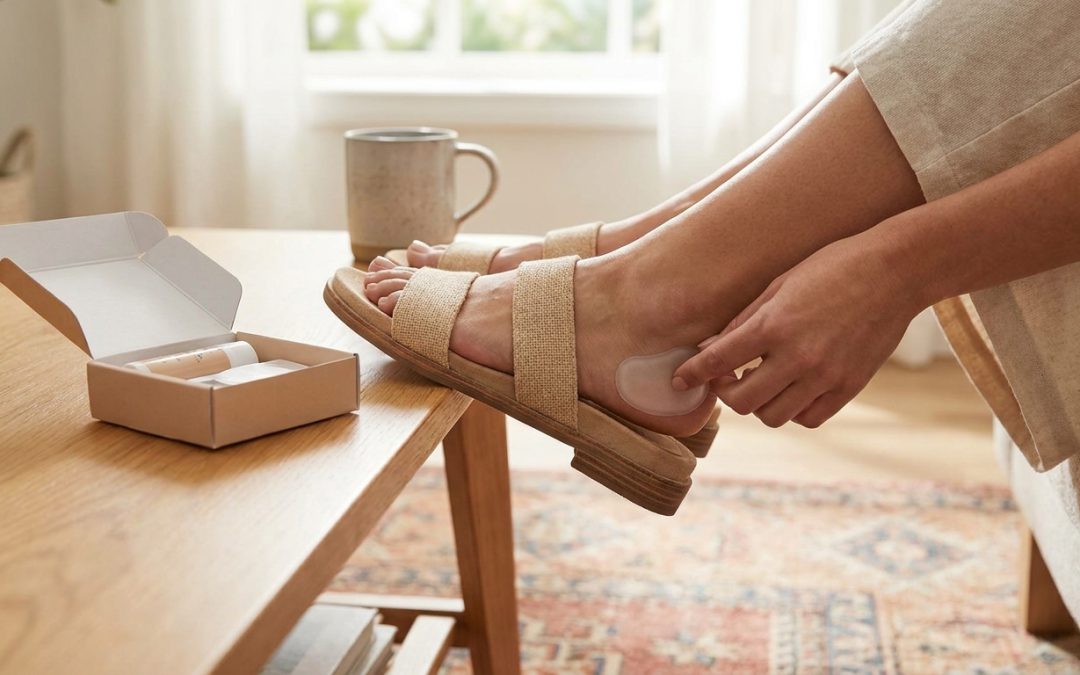
- Specialized Tapes and Dressings: For known “hot spots,” specific taping techniques can be incredibly effective. Unlike a simple bandage, products like kinesiology tape or zinc oxide tape are applied smoothly to clean, dry skin before activity. The tape acts as a second skin, taking the brunt of the shear force and friction. Modern hydrocolloid blister cushions go a step further; when applied to an early-stage hot spot or an intact blister, they provide significant cushioning and create an optimal healing environment that can last for several days, even through showers.
- Low-Friction Patches: An innovative approach involves applying low-friction patches, often made of Polytetrafluoroethylene (PTFE), directly to the inside of the shoe or onto an insole in problem areas. These slick surfaces drastically reduce the friction between the sock and the shoe, allowing the sock to slide more easily and reducing the shear force on the skin beneath.
Moisture Control is Non-Negotiable
Because moisture significantly increases friction, keeping feet dry is a primary goal. For women dealing with excessively sweaty feet (hyperhidrosis), a foot specialist in Nanaimo or Victoria might recommend more targeted solutions.
- Antiperspirants: Applying an antiperspirant to the feet can significantly reduce sweating and, therefore, moisture levels inside the shoe.
- Foot Powders: Absorbent powders can help manage moisture and act as a dry lubricant, though their effectiveness can be limited during prolonged, intense activity.
- Proper Footwear Ventilation: Choosing shoes made from breathable materials helps moisture to evaporate, contributing to a drier internal environment.
The Biomechanical Connection: Why Chronic Blisters Need a Deeper Look
When women in Langley experience blisters in the same spot, time and time again, despite using the right socks and shoes, it’s a strong indicator of an underlying biomechanical issue. Industry case studies consistently show that recurring blisters are often a symptom of how a person’s foot is structured and how it moves. Foot deformities like bunions, hammertoes, or bone spurs create prominent areas that are subjected to immense pressure and shear.
This is where a podiatrist’s expertise becomes invaluable. A thorough biomechanical assessment and gait analysis can reveal subtle inefficiencies in foot function that concentrate force on specific areas. For example, a foot that overpronates (rolls inward excessively) can cause shearing forces on the inner arch and big toe joint. This is a problem that no amount of fancy socks or moleskin can truly solve.
Custom Orthotics: The Ultimate Non-Surgical Solution
For those with biomechanical challenges, the most effective long-term solution is often a pair of custom orthotics. Unlike off-the-shelf insoles, custom orthotics prescribed by a podiatrist are medical devices crafted from a precise 3D scan or mold of the patient’s feet. Their function goes far beyond simple cushioning.
Professionals in podiatry design custom orthotics to correct faulty foot mechanics. They work by:
- Redistributing Pressure: Orthotics evenly distribute body weight across the entire surface of the foot, reducing the intense pressure on common blister spots like the heel, ball of the foot, or toes.
- Controlling Abnormal Motion: They can gently guide the foot into a more neutral alignment, significantly reducing the pathological shear forces caused by conditions like overpronation.
- Improving Shock Absorption: By absorbing impact, they lessen the overall stress on the skin and underlying structures.
For many women in communities like Penticton and Courtenay, getting fitted for custom orthotics in Victoria or their local clinic is the turning point that finally ends their cycle of chronic blisters, allowing them to walk, run, and work without pain.
Local Expert FAQ
Here are answers to some questions frequently encountered in our British Columbia clinics.
What is the first thing I should do if I feel a ‘hot spot’ forming?
Industry professionals advise stopping the activity immediately if possible. A hot spot is the warning sign that the skin is undergoing excessive shear. The best course of action is to dry the area thoroughly and apply a protective layer, such as a specialized blister tape or a hydrocolloid cushion, to reduce friction and pressure before continuing.
Is it ever okay to pop a blister?
The professional consensus is to leave a blister intact whenever possible. The roof of the blister provides a sterile barrier that protects the healing skin underneath from infection. Draining should only be considered if the blister is very large, extremely painful, and preventing you from walking. If necessary, this is best done by a medical professional to minimize infection risk. If a blister pops on its own, the area should be gently cleaned, an antibiotic ointment applied, and covered with a sterile bandage.
How do I know if my shoes fit properly?
A proper fit is crucial. There should be about a thumb’s width of space between your longest toe and the end of the shoe. The shoe should be wide enough that your foot doesn’t bulge over the sides, and your heel should not slip excessively when you walk. Industry experts recommend shopping for shoes at the end of the day when your feet are slightly swollen to get the most accurate fit. A foot pain specialist in Victoria or Kelowna can provide a professional footwear assessment.
Could my recurring blisters be related to another condition?
Yes. For instance, in individuals with diabetes, even a small blister can be a serious concern due to decreased circulation and sensation (neuropathy). If you have diabetes, it is critical to have any blister professionally assessed. Recurring blisters can also point to structural issues like bunions or hammertoes that require a podiatrist’s care. At Island Foot Clinics, our specialists in diabetic foot care in Surrey and other locations are equipped to handle these complex cases.
Key Takeaways
- Blisters are caused by internal shear forces that tear the layers of the skin, not just by external rubbing.
- Effective prevention requires a multi-pronged strategy focused on managing friction, controlling moisture, and correcting biomechanics.
- Upgrading to moisture-wicking socks made of wool or synthetic blends is one of the most impactful changes you can make.
- Advanced dressings like hydrocolloid cushions and preventative taping can protect vulnerable areas before blisters form.
- For chronic, recurring blisters, an underlying biomechanical issue is likely the cause.
- Custom orthotics in Nanaimo and other BC locations are a powerful, non-surgical tool to correct foot mechanics and eliminate the root cause of recurring blisters.
You don’t have to plan your life around the fear of painful blisters. By moving past outdated advice and embracing a modern, biomechanics-based approach, women across Langley and beyond are taking control of their foot health. The secret isn’t surgery or a miracle cream; it’s a professional strategy that addresses the true cause of the problem. By focusing on friction management, moisture control, and proper foot mechanics, you can leave painful blisters behind for good.
While we aim for accuracy, please verify details for your specific situation. For personalized advice and to discuss how these insights apply to your specific needs, we’d love to chat with you directly.
Ready to take the next step towards blister-free activity? Contact Island Foot Clinics at our Langley location or one of our other convenient clinics in Kelowna, Victoria, Nanaimo, Penticton, Surrey, Abbotsford, Chilliwack, Cranbrook, White Rock, Vernon, or Courtenay to schedule a comprehensive foot health assessment today.