
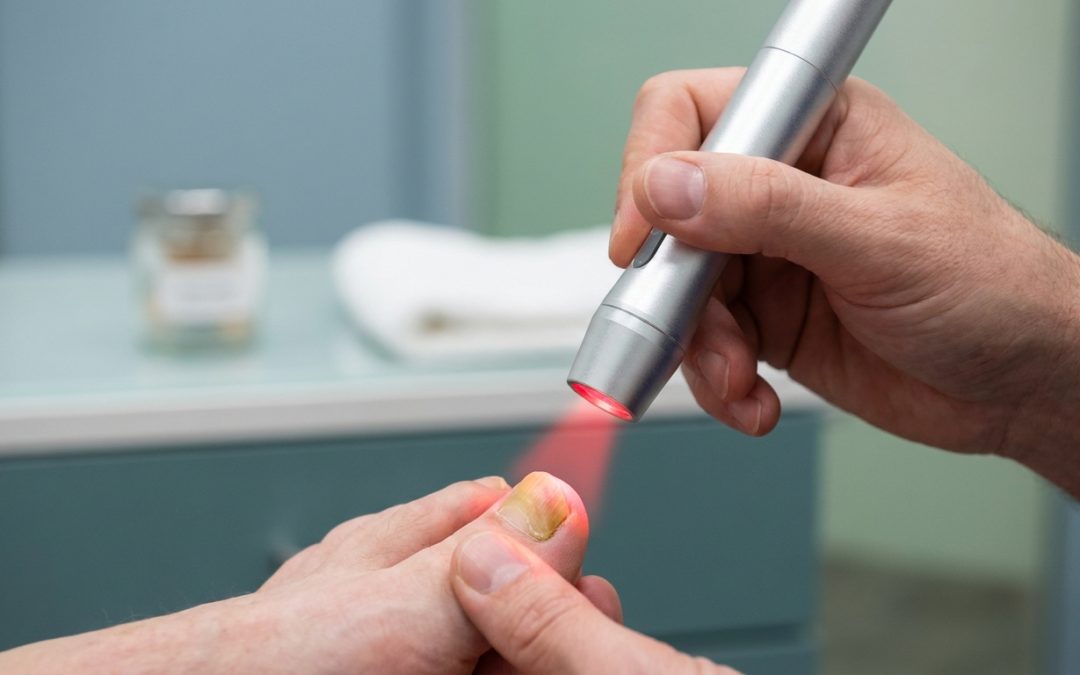
A discoloured, thickened, or brittle toenail is often dismissed as a minor cosmetic problem—something to be covered up and ignored. Yet, what many residents across Surrey, Langley, and Abbotsford fail to realize is that this is not just a stain; it is a progressive infection known as onychomycosis. Industry data consistently reveals a troubling truth: reliance on generic, over-the-counter (OTC) remedies frequently leads to a cycle of frustration, wasted expense, and a worsening condition that can ultimately affect mobility and overall health.
Podiatry professionals throughout British Columbia are observing a significant gap between public perception and clinical reality. While pharmacy shelves are stocked with creams, lacquers, and ointments promising a quick fix, their effectiveness is severely limited. Studies and clinical observations show that the complete cure rate for many topical OTC antifungal treatments can be as low as 5.5% to 8.5%. The core of the problem lies in a fundamental misunderstanding of the infection itself. Fungal colonies don’t just sit on the nail’s surface; they thrive deep within the nail plate and underneath, in the nail bed, shielded by layers of dense keratin. This biological fortress renders most surface-level treatments ineffective, leading many to battle the same infection for months or even years without success.
The real cost of this ongoing battle isn’t just the money spent on ineffective products. It’s the risk of the infection spreading to other nails, the development of pain when wearing shoes, and for individuals with underlying conditions like diabetes or circulation issues, the potential for far more serious complications. Fortunately, advancements in podiatric medicine, specifically Health Canada-approved cold laser treatments, offer a scientifically superior approach that targets the fungus at its source, providing a clear path to healthier nails without the pitfalls of generic remedies.
What Industry Professionals Know About the Failures of Generic Remedies
In podiatry circles, from White Rock to Chilliwack, the conversation around onychomycosis is clear: the majority of self-treatment attempts with generic remedies are destined to fail. This isn’t due to a lack of effort from the individual but rather the inherent biological limitations of the products themselves. Here is what experts in foot health understand about why that seemingly convenient trip to the pharmacy often becomes a prolonged and fruitless endeavour.
The Impermeable Shield: Why Topical Treatments Can’t Reach the Fight
The primary reason for the failure of OTC creams and lacquers is a simple matter of physics and biology. The toenail is a hard, dense structure made of keratin, designed by nature to be a protective barrier. Podiatrists often compare applying a topical antifungal to a thickened, infected nail to trying to wash a dirty floor by scrubbing the carpet on top of it. The medication simply cannot penetrate through the nail plate to reach the fungal colony living in the nail bed underneath.
Professional insights confirm this barrier problem:
- Lack of Penetration: Most OTC agents are not formulated to traverse the dense keratin layers. The active ingredients remain on the surface, unable to reach and eradicate the source of the infection.
- Nail Thickness and Debris: As the fungus proliferates, it causes the nail to thicken and become brittle. This creates even more layers for a topical product to get through and allows debris to build up, further shielding the fungus.
- Inconsistent Application and Premature Stoppage: Effective treatment requires relentless consistency over a very long period—often 12 months or more, as the entire nail must grow out. As recently noted in September 2026, a common mistake is stopping treatment too early when slight improvements are seen, allowing the resilient fungus to rebound.
Misdiagnosis: Fighting the Wrong Enemy
A critical flaw in the self-treatment approach is the assumption that every discoloured or thickened nail is caused by a fungus. Podiatrists in clinics from Victoria to Vernon know that several other conditions can mimic the symptoms of onychomycosis.
These conditions can include:
- Psoriasis of the nail: An autoimmune condition that can cause pitting, discoloration, and thickening.
- Nail trauma: A past injury to the toe can result in a permanently thickened or discoloured nail.
- Age-related nail changes: Nails can naturally become more brittle and change colour over time.
Applying antifungal medication to a nail affected by trauma or psoriasis is completely ineffective and only delays a correct diagnosis and proper care. A professional evaluation is essential to confirm the presence of a fungal infection, often through a simple nail sample analysis, before any treatment begins.
The Hidden Risks of Oral Medications
For those who move from failed topical treatments to prescription oral medications, a new set of considerations arises. While oral antifungal pills like terbinafine (Lamisil) can be more effective, with cure rates around 70-80%, they work systemically, meaning the drug circulates throughout the entire body. This approach carries potential risks that podiatric professionals carefully manage.
As outlined in medical reviews from early 2024 and 2026, concerns with oral medications include:
- Liver Toxicity: The most significant concern is the potential for liver strain or damage, which is why physicians often require baseline and periodic blood tests to monitor liver function.
- Drug Interactions: Oral antifungals are metabolized by the liver and can interfere with a wide range of other medications, including certain heart medications, statins, and antibiotics.
- Systemic Side Effects: Patients may experience a variety of side effects, including gastrointestinal issues, skin rashes, headaches, and a loss of taste.
For many patients, especially those with pre-existing health conditions or those taking other medications, these potential side effects make oral antifungals a less-than-ideal option.
The Professional’s Guide to Cold Laser Therapy: A Superior Strategy
Faced with the low efficacy of topical remedies and the systemic risks of oral drugs, the field of podiatry has embraced a more advanced, targeted solution: cold laser therapy. Health Canada has approved specific laser devices, such as the Lunula Laser, for the treatment of onychomycosis, marking a significant step forward in fighting this stubborn infection. This technology, available in specialized clinics like those in Surrey and throughout the Island Foot Clinics network, addresses the core challenges of fungal nail treatment head-on.
How Cold Laser Eradicates Fungus Without Harm
Unlike “hot” lasers that use thermal energy to destroy tissue, cold laser—or low-level laser therapy (LLLT)—is non-thermal and completely painless. The technology utilizes specific wavelengths of light to initiate a photochemical reaction that targets the fungus while leaving surrounding healthy tissue unharmed.
The Lunula Laser, a leading device in this field, employs a patented dual-diode approach:
- A 405 nm Blue Laser: This specific wavelength has direct antifungal properties. It is absorbed by the fungal cells and produces reactive oxygen species, like hydrogen peroxide, which are cytotoxic to the fungus, breaking down its cell wall and inhibiting its ability to reproduce.
- A 635 nm Red Laser: This wavelength works symbiotically to stimulate the body’s own defense mechanisms. It increases blood flow to the area, enhances the immune response of local cells, and accelerates the growth of a new, healthy nail.
This dual-action approach doesn’t just kill the fungus; it creates an environment where the body can effectively fight the infection and heal itself. The procedure is simple, with patients placing their foot in the device for a session that typically lasts about 12 minutes per foot. There is no heat, no pain, and no downtime—patients can put their shoes on and resume their daily activities immediately.
Clinical Efficacy: What the Data Reveals
The professional shift towards cold laser therapy is driven by strong clinical evidence demonstrating its superiority over other methods. Multiple studies highlight its effectiveness and safety. Clinical trials have shown impressive results, with some studies reporting that over 85% of patients show a significant increase in clear nail growth. A May 2024 meta-analysis found that laser therapy demonstrated similar, and in some cases significantly higher, clinical and mycological cure rates compared to oral terbinafine, the gold standard oral medication.
Key data points from various studies include:
- Clearance rates often ranging from 79% to 97% over the full course of treatment and nail growth cycle.
- One study documented an 89% success rate in a podiatrist’s practice over 18 months.
- The treatment is safe for a wide range of patients, including many who are not candidates for oral medications due to other health issues.
For patients in communities like Penticton, Cranbrook, or Nanaimo dealing with persistent foot pain or embarrassing nails, this data signifies a crucial turning point. It represents a treatment that is not only highly effective but also exceptionally safe.
Local Expert FAQ
Why can’t I just use the same over-the-counter athlete’s foot treatment on my toenail?
Industry experts consistently advise against this because the skin and the nail are fundamentally different structures. Athlete’s foot (tinea pedis) is a fungal infection of the skin, which is soft and permeable. OTC creams are designed to penetrate these superficial skin layers. A toenail, however, is a hard, non-porous plate of keratin. The fungus causing onychomycosis lives *underneath* and *within* this plate, a location inaccessible to skin creams. Using a skin cream on a nail is ineffective and can delay proper diagnosis and care.
How many cold laser sessions will I need for my fungal toenail treatment in Surrey?
Professional standards suggest a protocol tailored to the individual’s condition. However, a typical treatment course for onychomycosis with a device like the Lunula Laser involves four weekly sessions, with each session lasting approximately 12 minutes per foot. For more severe or long-standing infections, additional sessions may be recommended. The podiatrist will assess the progress and create a personalized plan to ensure the best possible outcome.
Is cold laser therapy for toenail fungus covered by BC’s Medical Services Plan (MSP)?
Currently, laser treatment for onychomycosis is considered a private procedure and is not covered by the British Columbia Medical Services Plan (MSP). However, many patients find the long-term value and high success rate to be a worthwhile investment compared to the recurring cost and poor results of generic remedies. Some extended health benefit plans may offer partial coverage for podiatry services, so it is always recommended to check directly with your provider.
I have diabetes. Is cold laser a safe option for my diabetic foot care?
Yes, industry professionals consider cold laser therapy to be an exceptionally safe and often preferred treatment for patients with diabetes. Unlike oral medications that can have systemic side effects or interact with other drugs, cold laser is a localized treatment with no known contraindications for diabetic patients. In fact, because it improves local circulation, it can be beneficial. Proper management of onychomycosis is critically important for individuals with diabetes, as a thickened nail can lead to pressure sores and more severe complications.
Key Takeaways
- Generic Remedies Fail: Over-the-counter topical treatments for nail fungus have extremely low success rates (often below 10%) because they cannot penetrate the hard nail plate to reach the infection.
- Accurate Diagnosis is Crucial: What looks like a fungus may not be. Conditions like nail psoriasis or trauma can mimic onychomycosis, making a professional diagnosis essential to avoid wasted time and money on incorrect treatments.
- Oral Medications Carry Risks: While more effective than topicals, prescription oral antifungals work systemically and come with risks of liver strain, drug interactions, and other side effects.
- Cold Laser is Scientifically Superior: Health Canada-approved cold laser therapy uses specific wavelengths of light to safely destroy fungus and stimulate the body’s natural healing and immune response without pain or side effects.
- Clinically Proven Results: Studies show cold laser therapy has high success rates, often exceeding 85%, making it a leading evidence-based treatment for clearing fungal nail infections.
Your Next Step Towards Clear, Healthy Nails
Continuing the frustrating cycle of ineffective generic remedies is not a solution; it’s a delay that allows the fungal infection to become more entrenched and difficult to treat. The evidence-based approach used by podiatry professionals across British Columbia points clearly to the advantages of advanced medical technology. Cold laser therapy offers a safe, painless, and clinically effective way to win the fungal battle by targeting the infection directly at its source.
If you are tired of hiding your feet and want a definitive solution for your nail fungus, the professional standard of care has evolved. An accurate diagnosis and a treatment plan backed by science are the most direct paths to achieving clear, healthy nails and restoring your confidence.
While we aim for accuracy, please verify details for your specific situation. For personalized advice and to discuss how these insights apply to your specific needs, we’d love to chat with you directly.
Take the first step towards resolving your fungal nail concerns for good. Contact your nearest Island Foot Clinics location—whether in Surrey, Kelowna, Victoria, Nanaimo, or our other convenient locations—to schedule a comprehensive consultation today.